



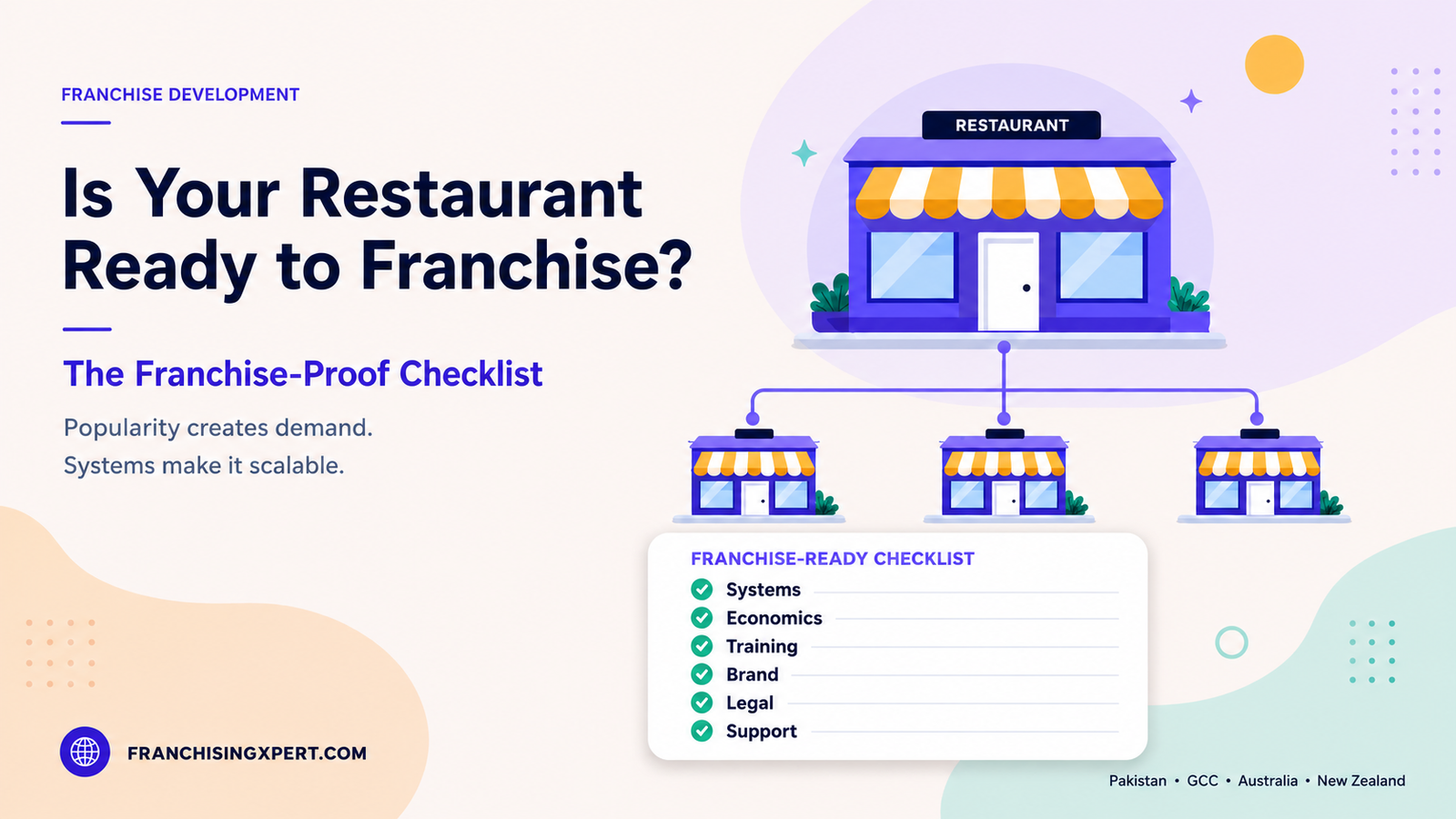
Is Your Restaurant Ready to Franchise? The Franchise-Proof Checklist
Most restaurants franchise too early and scale the chaos. This checklist helps you determine whether your restaurant can actually be replicated.
Your restaurant is not scaling. Its problems are.
That is the part nobody tells you before you sign your first franchise agreement. Franchising does not fix a shaky business; it copies it. Whatever is barely holding together at one outlet does not get better at ten. It gets multiplied into new cities, under people you have never trained, while you are no longer standing in the kitchen to catch it.
Before you sell a single territory, you need an honest answer to one question: is your restaurant actually franchise-ready, or is it simply popular?
There is a difference, and confusing the two is one of the most expensive mistakes a restaurant owner can make.
Key takeaways
- Popularity creates demand, but systems create a franchise.
- A franchise-ready restaurant can train, reproduce, protect and support its model at scale.
- Unit economics must remain viable after royalties and franchisee operating costs.
- Knowledge must live in manuals, specifications and measurable standards—not in a few irreplaceable people.
- Franchising before the operating system is ready multiplies inconsistency and reputational risk.
Popular and franchise-ready are two different things
A restaurant can have queues out the door, a menu people drive across town for, and three or four busy locations—and still not be ready to franchise.
Those things make you popular. They do not make you reproducible.
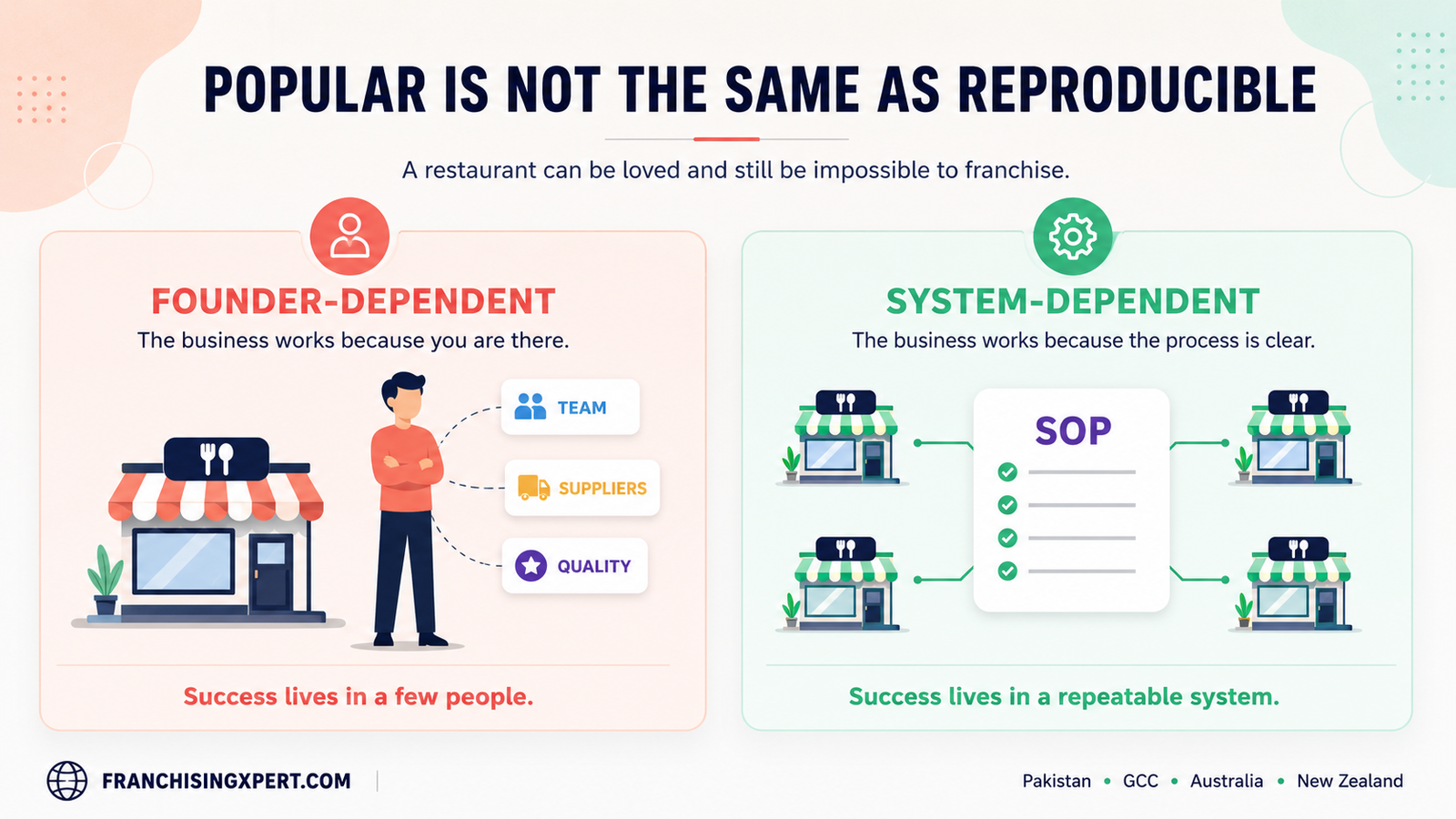
Popularity often depends on things that do not travel: your presence, your head chef's instinct, your relationships with suppliers, and the way your floor manager reads a room. Strip those out, hand the business to a franchisee in another city, and many brands discover that the success was never built into a system. It was held together by a few people who cannot be in two places at once.
Franchising asks a harder question than “Do customers love us?” It asks: “Can someone who is not us deliver the exact same experience, profitably, without us in the room?”
What “franchise-ready” actually means
Franchise-ready means the business no longer depends on the founder to function. The recipes, hiring, training, standards and daily firefighting all live in systems—not in your head.
If everything still flows through you, you do not have a franchise model. You have a founder-dependent business with extra branches. That is a fragile business to sell to someone else and ask them to bet their savings on.
A genuinely franchise-ready restaurant passes four tests. It can train, reproduce, protect and support the concept at scale.
Train
Can you teach a stranger to run it from a manual—not from years spent beside you?
Reproduce
Will the same dish, plated the same way, taste the same in a city you have never visited?
Protect
Do your operating and brand standards hold when you are not the person enforcing them?
Support
Can you support ten owners at once without burning out or weakening your own business?
Miss one of these tests and the cracks appear quickly once you are no longer the person watching every shift.
The Franchise-Proof Checklist
Go through this honestly. If you hesitate on more than a few of these points, you are not ready to expand yet. You are ready to build the foundation first.
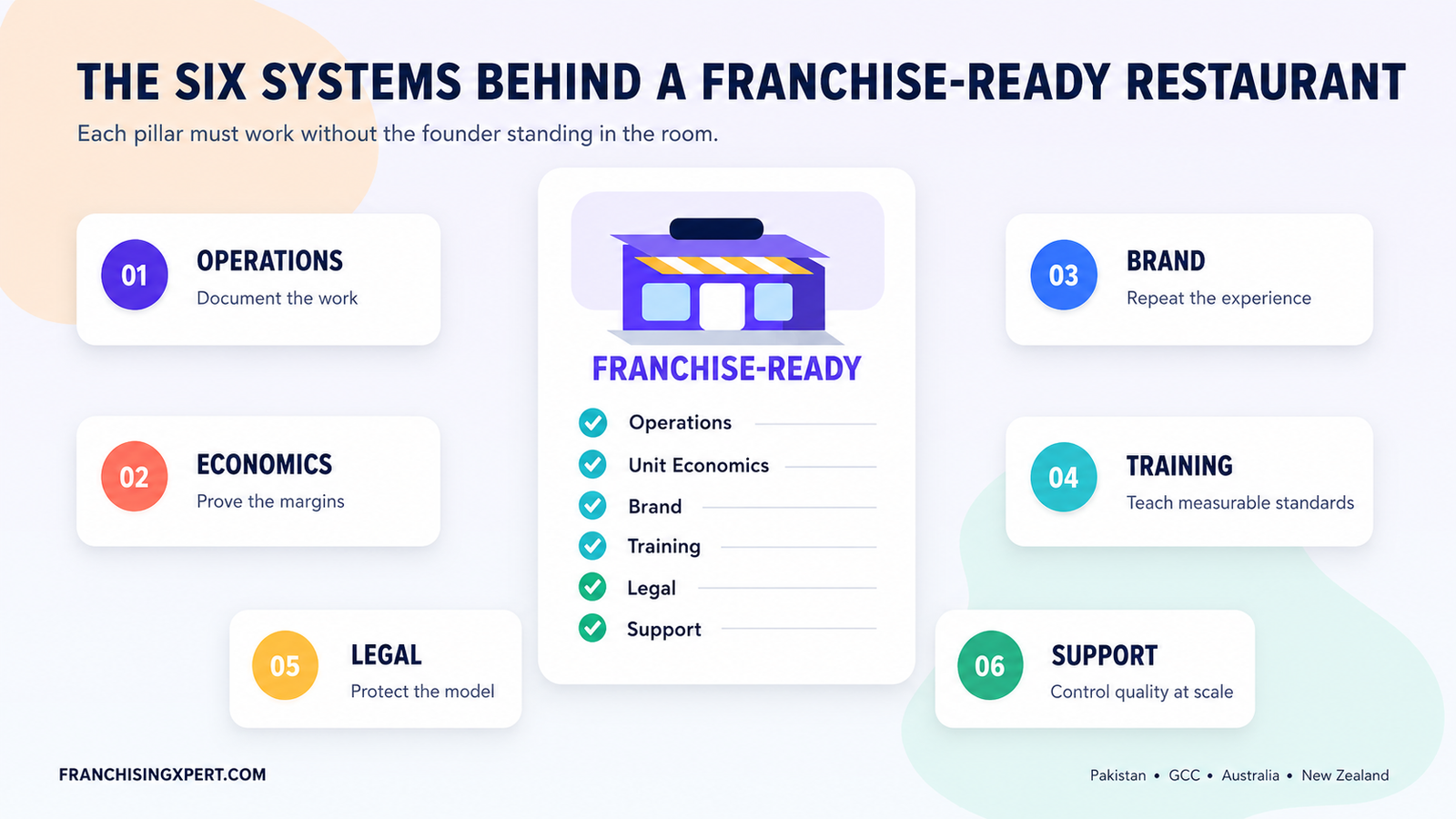
1Operations and systems
- Every core process is written down—opening, closing, preparation, service and cleaning—not merely “known”.
- A newly trained manager could run a full day from the manual without calling you.
- Recipes are standardised with exact quantities, approved suppliers and plating specifications—not “to taste”.
- Your kitchen runs the same whether you are there or not.
- You have stayed away from the restaurant for two weeks and the standards and numbers held.
2Unit economics and profitability
- A single outlet is reliably profitable—not merely breaking even because of unusually high volume.
- You know the real food cost, labour cost and operating margin for each location.
- The model still makes money after the franchisee pays royalties and other ongoing fees.
- You can show a realistic investment payback period to a potential franchisee.
- Profit does not depend on a special deal or location only you could have secured.
3Brand and customer experience
- The customer experience is consistent across existing outlets—not only at the flagship.
- Customers can describe what makes the brand different in one sentence.
- The positioning can travel; it is not tied to one neighbourhood or one personality.
- Quality does not fall on the days when you are not on the floor.
4Training and people
- You have a structured onboarding programme—not informal, on-the-job guesswork.
- Employees are trained to measurable standards—not to “whatever the senior employee does”.
- You could open a new location with a team that has never met you.
- Critical knowledge lives in documents—not in two or three irreplaceable people.
5Legal and compliance
- Your brand name, intellectual property and core assets are properly protected.
- You have a franchise agreement and disclosure structure designed for the relevant market.
- Territory rights, initial fees, ongoing fees and royalties are clearly defined.
- The operation complies with food, labour and franchising regulations wherever you plan to grow.
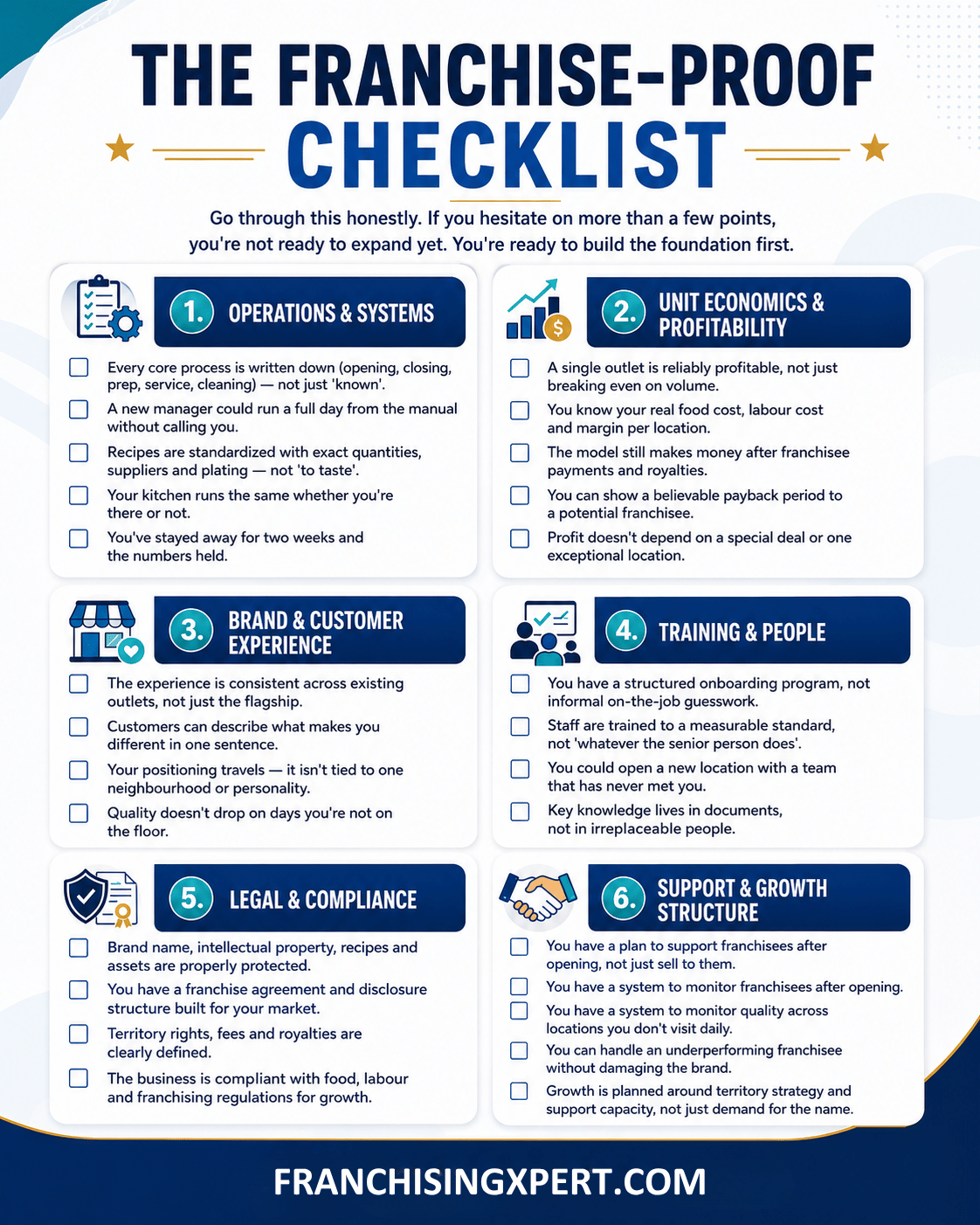
If most of these items are checked, your restaurant may be in strong shape to franchise. If they are not, that is not bad news. It may be the most useful thing you learn this year because it tells you exactly what to build before spending money on expansion.
The real cost of franchising too early
Owners who rush do not usually fail loudly. They fail slowly. The second outlet is slightly off. The third develops its own way of doing things. A franchisee in another city cuts a corner you would never allow, a customer notices, and inconsistency begins eating the reputation you spent years building.
By then, the problem is expensive to correct because you are no longer fixing one restaurant. You are correcting a system that has already been sold to other people.
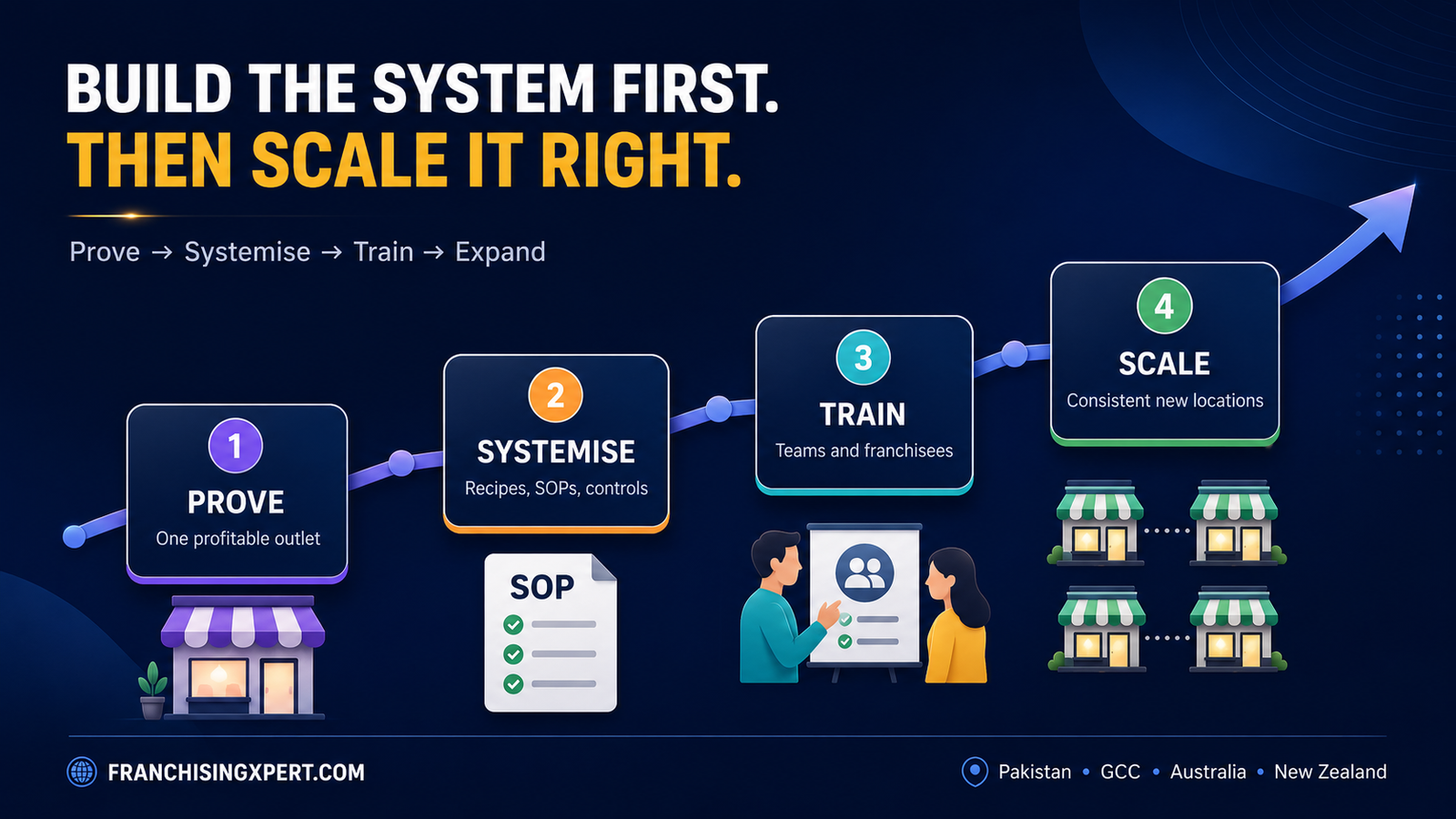
Every failed franchise looked successful immediately before it expanded. The difference was rarely the food. The difference was whether the business underneath the food could be copied without breaking.
Build the system first. Then expand. That order is the whole game.
Frequently asked questions
How do I know if my restaurant is ready to franchise?
Your restaurant is ready to franchise when it runs on documented systems rather than on you. If a trained person can deliver the same food, service and standards in a new location without your daily involvement—and a single outlet is reliably profitable—you are moving into franchise-ready territory. If the business depends on your presence, it is not ready yet.
Can a popular restaurant still fail to franchise?
Yes. Popularity often comes from people and relationships that do not transfer to a new owner in a new city. Without standardised recipes, training and operating systems, a popular restaurant has nothing reliably reproducible to sell. Franchising then spreads the gaps instead of the success.
How many locations should I have before franchising?
There is no universal number, but you generally want at least one or two outlets that are profitable and consistent while running on systems rather than your personal involvement. Proving that the model works in more than one location—especially one you do not manage every day—matters more than the raw location count.
What is the most common franchising mistake restaurant owners make?
Expanding before the system is built. Owners see strong demand and assume the business is ready when it is still founder-dependent. Franchising a business that is not documented and reproducible multiplies operating problems across every new outlet.
How long does it take to make a restaurant franchise-ready?
It depends on how much of the operation already lives in systems rather than in the founder's head. Documenting operations, standardising recipes, validating unit economics, and building training and legal frameworks typically requires several months of focused work. That is still far less costly than fixing a broken franchise after launch.
Build it once. Then scale it right.
This is exactly the work we do at FranchisingXpert.
We help restaurant and food brands turn a successful outlet into a system that can actually be franchised across Pakistan, the GCC, Australia and New Zealand. With more than 15 years of experience building and managing multi-unit franchise networks, we do not simply tell you whether you are ready. We build what is missing.
- A franchise model and unit economics that remain commercially viable after royalties and ongoing franchise costs.
- Operating systems and documentation that allow a franchisee to run the concept without the founder in the room.
- Standardised menu and kitchen operations so the food remains consistent across cities.
- Legal and compliance frameworks, agreements, territory rights and brand protections designed for the relevant market.
- Franchisee recruitment and ongoing support systems that protect the brand after opening—not only at signing.
If this checklist exposed gaps in your restaurant, that is the conversation to have now—before expansion, not after it.